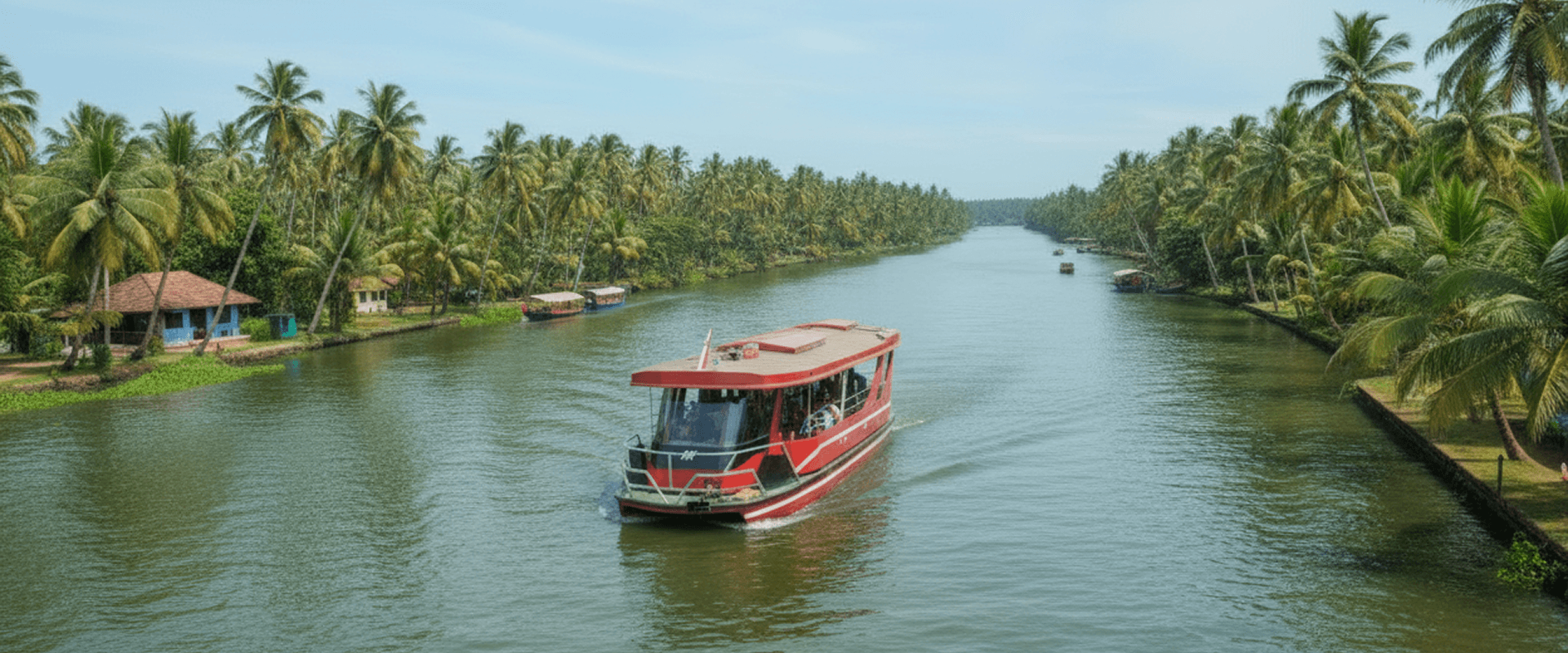
Poseidon
The most effcient solar-electric ferry
Capacity
0
PAX
Speed
0
Knots
Range
0
Kms
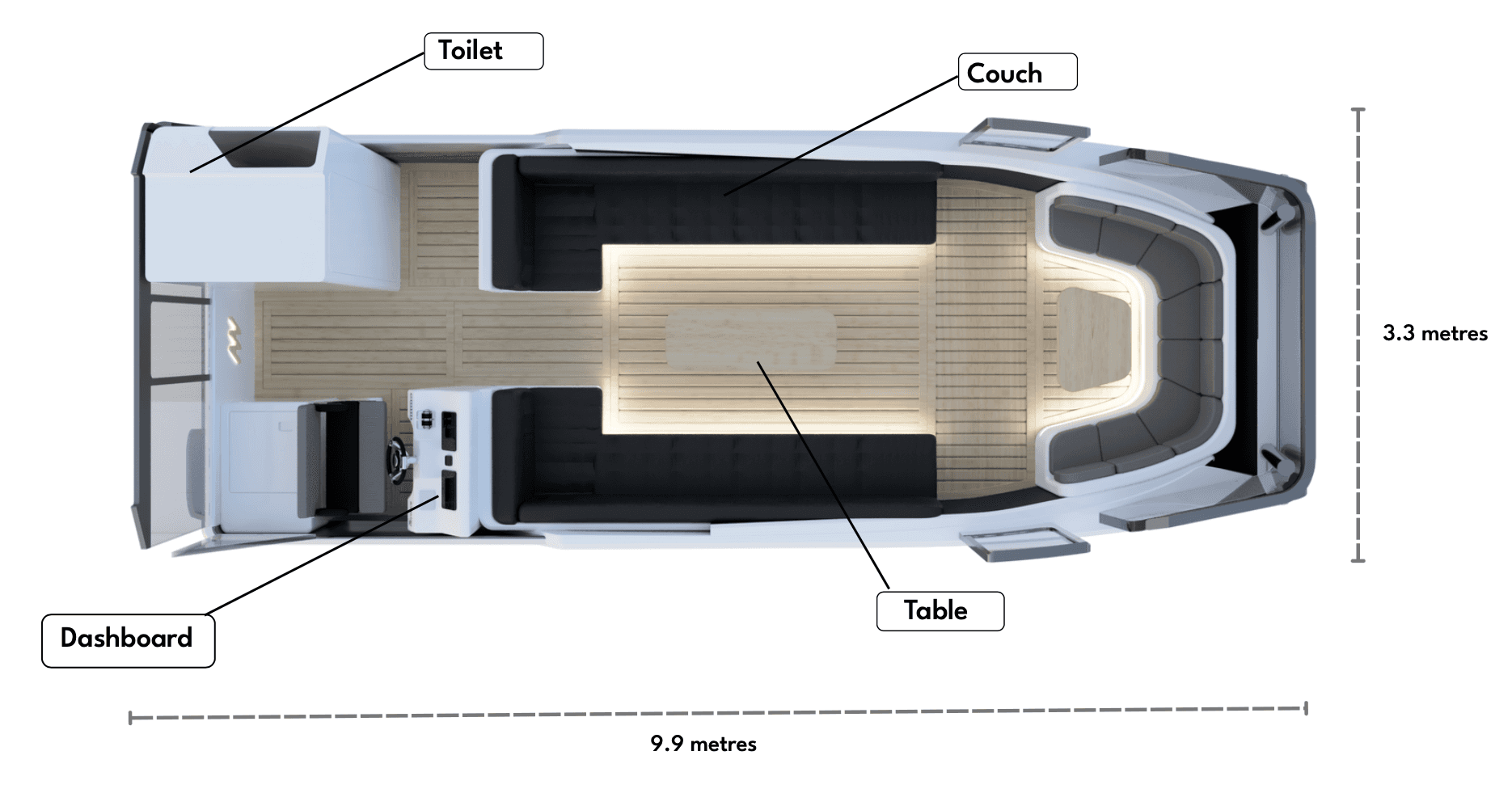
The perfect interiors for parties or any
occassions, with a couch styled seating
& tables and plenty of space for
comfort.
Poseidon
The most effcient solar-electric ferry
100% Solar Electric
Zero Emission, Zero Noise, Zero Vibration
Interior


test yachts
test yachts
test yachts
test yachts
test yachts
test yachts
Layout
Exteriors
India’s First Solar Ferry
India’s First Solar Ferry
India’s First Solar Ferry
India’s First Solar Ferry
Technical Specifications
Offering a range of safety features and world class certifications.
Feature
Specification
Charging
Optional plug & charge
Battery
2 x 20 kWh (Upto 2 x 30 kWh*) RAY LFP
Dimensions
Dimensions 9 m long × 3.3 m wide
Passenger Capacity
Passenger Capacity 15 passengers
Propulsion
Speed (Hybrid)
7 knots (upto 10 knots *)
Speed (Electric)
Range 60 km
Solar Capacity
3 kWp

Economics
For a public transport service like SWTD, where profitability is not important, the operating costs should be covered by revenue from passenger tickets. In this case, we’re looking at a cost comparison of multiple options, as well as the total cost of ownership for both options.
CAPEX
This is the initial cost of owning the boat. The cost of ADITYA was 1.95 crore (at the 2013 tender price). Years later, such a boat would be worth 3.5 CR. A diesel ferry with a similar capacity (75 passengers) built under the IR class (or any other IACS (International Association of Classification Societies) member class) would cost around 1.5 million dollars.
RECYCLING COST
Most passenger ferries are designed to last twenty years. It is not prudent to design ferry systems for a longer period since, by then, a far better technology would have come to enable replacement. At the end of its life, there is a recycling cost, but the residual value of materials and equipment in the boat may be higher than this, and hence there might be a net positive value of the boat. The batteries are recycled by the manufacturer as per EU guidelines. At the end of its life, the recycling cost of the boat is insignificant.
OPEX
In the total cost of operating the boat, there are three broad cost groups:
Energy
Maintenance
Crew and overheads
On average, a vessel operates for 350 days a year.
Energy cost
A typical ferry boat crossing the backwater in the Vaikom-Thavanakkadavu sector, a distance of 2.8 kilometers, charges only 4 rupees for the journey on one side.Each trip takes about 13–15 minutes (at a speed of 10–12 km/hr). If it operates from 7 a.m. to 7 p.m., taking 22 trips and having sufficient time for passenger embarkation and crew breaks, it would need about 100 litres of diesel (at 10 litres per hour). It is the cost of fuel for running the boat and its systems, i.e., running both main and auxiliary engines.
For a solar ferry without any fuel onboard, the energy cost is the cost of the grid used to charge the batteries. The total energy consumption is 7,969 units, and the energy cost is $62,235. This energy cost is expected to increase by 5% every year with the increase in grid costs. The primary cost of a diesel ferry is energy.The daily fuel consumption is 100 liters, and for a diesel price of 60.41, the daily energy cost is 6,041 (at 60.41 per liter, the average price in Kerala for 2017). This was 21,02,429 for the first year.The diesel price is also expected to increase by 5% every year.
Maintenance cost
These are the total costs to keep the boat running.There are three kinds of maintenance activities. The first type is exclusively for diesel engines. This includes the replacement of consumables.
like lube oil and filters, as well as engine overhaul charges, both of which are regularly done every 45 days for diesel ferries. For solar ferries without any engines, this is not there. Net of fuel costs, the average maintenance cost is about 3% for lube oil and 7% for filters and engine overhauls.The total is about $604 per day. In the first year, this was 2,10,243. The second type is the cost of replacing the battery cells. The propulsion battery has a warranty of five years. However, based on the battery discharge level, the replacement cycle for the battery would be seven years. It is important to note that the battery’s storage capacity is expected to be 80% of the new one at this time, not that it becomes unusable.At the current price, the replacement cost of the cells is expected to be 25 lakhs.This would be lower considering the annual reduction in the price of lithium cells due to the increased adoption of electric vehicles. The third type is the cost of replacing or repairing damaged parts or equipment and the cost of maintaining the boat in good condition. It is assumed that this is similar in both boats and is therefore not considered.
Crew and overheads
These are the costs of maintaining the crew as well as the overheads of the head office for boat operation. For these kinds of boats, three crew members are needed to operate them. Since these are similar in both kinds of boats, this is not considered for comparison.
FINANCE COST
To factor in the time value of money, the difference in the initial cost between the boats is financed, and the EMI for the same is taken as the finance cost for the solar ferry. The interest rate is assumed to be at 12%, although the Kerala government has lower costs. The cost difference of 45 lakh (Sec 5.2) needs to be financed. After iteration, we can see that in 36 months (3 years), with an EMI of 1.49 lakhs and an annual cost of 17.94 lakhs, this difference in cost can be repaid. The total cost of financing for the 45 lakhs is 53.81 lakhs. After this period, there are huge savings every year.