.
A new partnership is taking Indian marine innovation from Kerala's backwaters to the Mediterranean with Cyprus' first solar-electric passenger boats targeted for April 2027.
Navalt Green Mobility has signed a Memorandum of Understanding with the Cyprus Marine and Maritime Institute (CMMI), marking the beginning of a long-term strategic partnership to introduce electric, hybrid-electric, and solar-electric boats to the Republic of Cyprus.
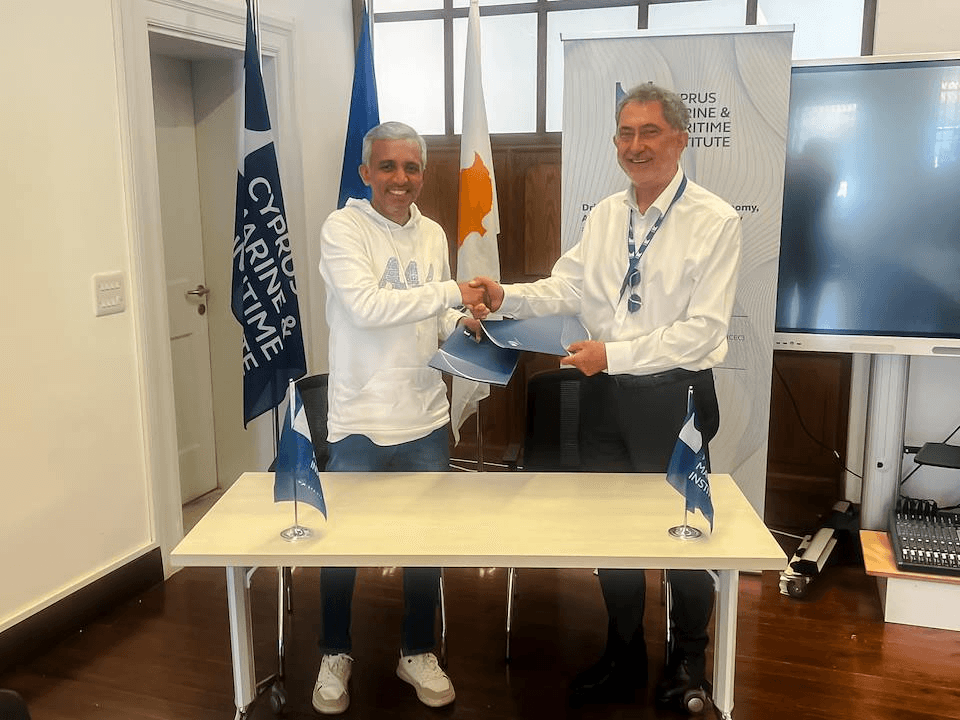
The agreement was signed at CMMI House in Larnaca by Sandith Thandasherry, CEO of Navalt, and Zacharias Siokouros, CEO of CMMI. More than a formal handshake, it establishes a working framework for collaboration across the complete lifecycle of marine projects from design and engineering through to manufacturing, commissioning,
From Kerala's Backwaters to International Waters
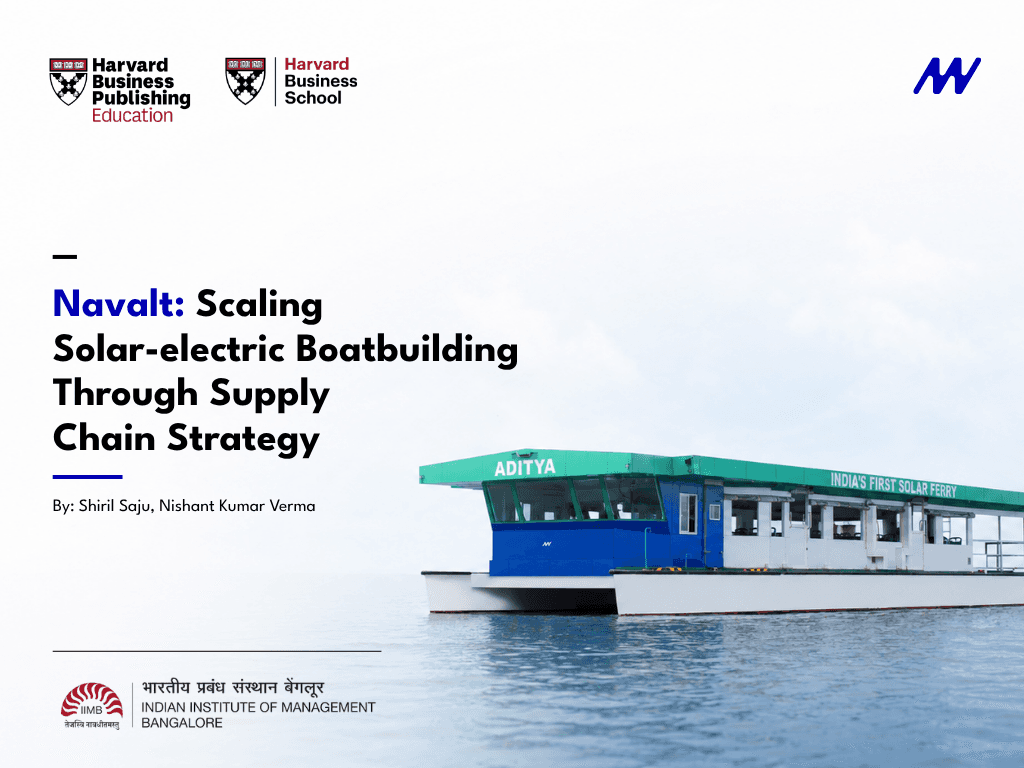
Navalt's journey in solar-electric mobility began with Aditya, India's first solar-electric ferry, Which entered service in Kerala in 2017. In 2020, Aditya received the Gustave Trouvé Award as the World's Best Electric Ferry and continues to demonstrate the economic and environmental benefits of solar-powered passenger transport.
Since then, Navalt has expanded its portfolio with Indra, India's largest solar-electric ferry, Barracuda, India's fastest solar-electric ferry, and SRAV, the world's first solar-electric fishing boat. Collectively, these vessels have carried nearly two million passengers, validating the reliability and scalability of clean maritime transportation. The partnership with CMMI represents the next stage of that journey, bringing proven technology from India's inland waterways to the Mediterranean.
A Partnership Built for Long-Term Growth
The MoU establishes Cyprus as the primary territory for collaboration, while also allowing future expansion into Greece, Malta, other Mediterranean countries and the wider European Union through mutual agreement.
Depending on project requirements, vessels may be:
• Designed and built entirely in India before being delivered to Cyprus.
• Assembled in Cyprus using knock-down kits and major systems supplied by Navalt.
• Manufactured locally using Navalt's engineering expertise, technology and technical support.
Each project will adopt the execution model that best suits customer requirements, commercial considerations, manufacturing capabilities, and local regulations. A Joint Steering Committee comprising representatives from both organizations will oversee business development, manufacturing strategy, and project execution.
Cyprus' First Solar-Electric Passenger Boats
The partnership has already identified a clear first objective. Cyprus' first solar-electric passenger boats are targeted to commence operations by April 2027, introducing zero-emission passenger ferry services to Cypriot waters and supporting the country's transition towards cleaner maritime transport. The project also reflects a broader vision of reducing emissions while improving the economics of short-distance passenger transportation.
Strengthening India-Cyprus Maritime Cooperation
Beyond commercial passenger transport, the collaboration also aims to contribute to maritime security and defense innovation. Building upon the strengthening strategic relationship between India and Cyprus, Navalt and CMMI plan to jointly develop and manufacture autonomous maritime vessels for defense Applications.
By combining Navalt's expertise in electric propulsion and autonomous marine technologies with CMMI's research and innovation capabilities, the partnership seeks to support the future operational needs of the defense forces of both countries.
A New Chapter in a Longer Journey
A Memorandum of Understanding is the foundation for collaboration rather than its conclusion. Over the coming months, the Joint Steering Committee will work on technical planning, commercial opportunities, regulatory approvals and project implementation, with individual vessel programmes are being executed through separate project agreements.
For Navalt, this partnership represents another milestone in a journey that began on the lakes of Kerala and now extend across international waters. From building India's first solar-electric ferry to enabling Cyprus' first solar-electric passenger boats, the mission remains the same: to create cleaner, smarter and more sustainable waterways wherever boats can sail